Let’s Talk Halogen Infrared Bulbs
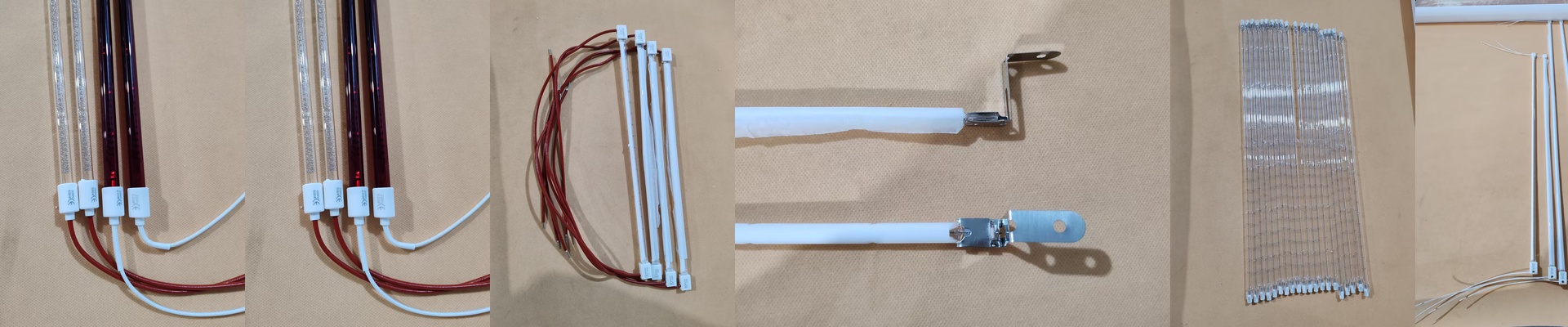
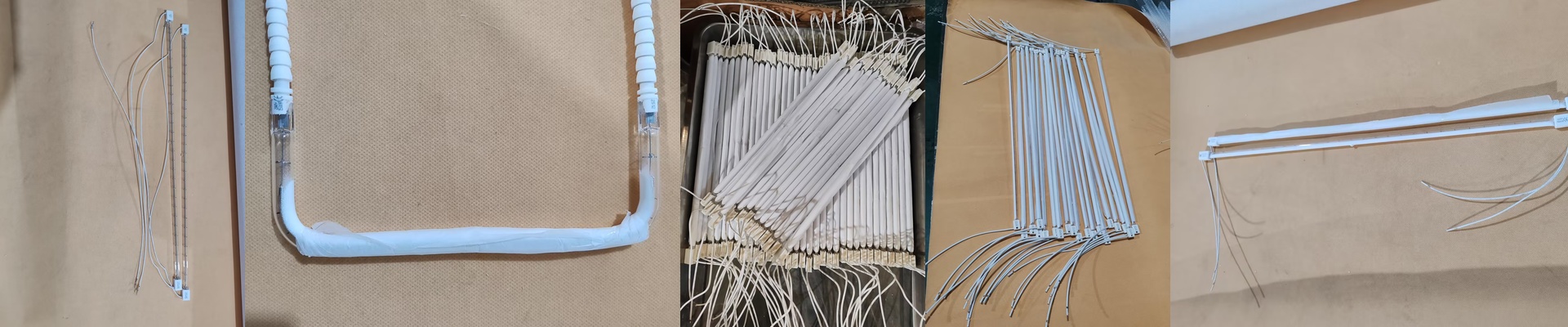
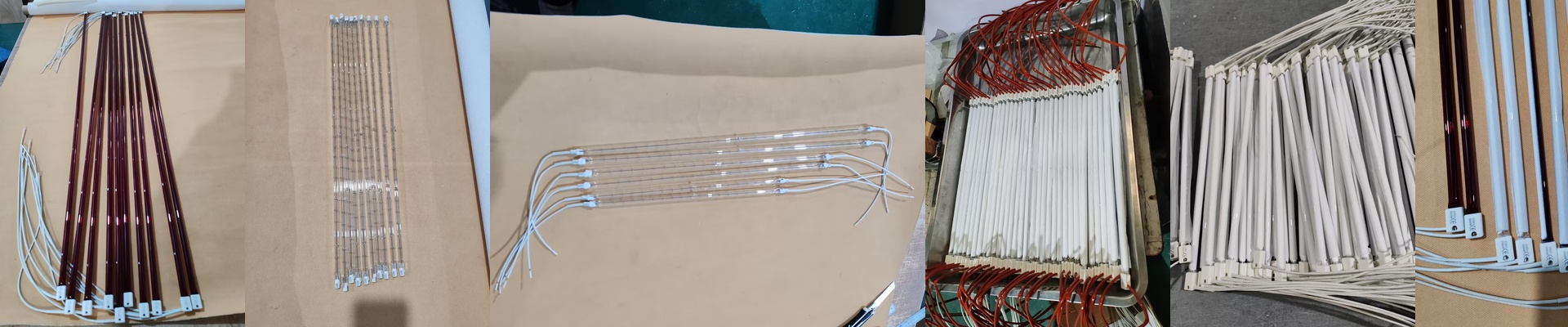
Ever wonder why some heaters just… work? Like, they hit that perfect temperature almost instantly? That’s the magic of halogen infrared bulbs. Basically, we take a tungsten filament and wrap it in a quartz envelope filled with a special halogen gas mix. This stops the filament from burning out too quickly, which lets us crank the heat way higher than your average IR lamp. It’s intense.
Getting the Power Right
When you’re picking a bulb, it all comes down to voltage and wattage. That’s where your heat density lives. If you go with a high-wattage tube—we’re talking 2000W or more—packed into a short space, you get a massive blast of heat. You need this if you’re blowing PET bottles or curing plastic. In those jobs, you don’t have minutes; you have seconds to hit that “glass transition” point before the material sets. But here is the catch:Your power supply has to match the bulb exactly. If you plug a low-voltage bulb into a high-voltage circuit? Pop. Filament’s gone. On the flip side, if you under-power it, the heat output drops, and suddenly your production cycle starts lagging.
The Build: Quartz and Connectors
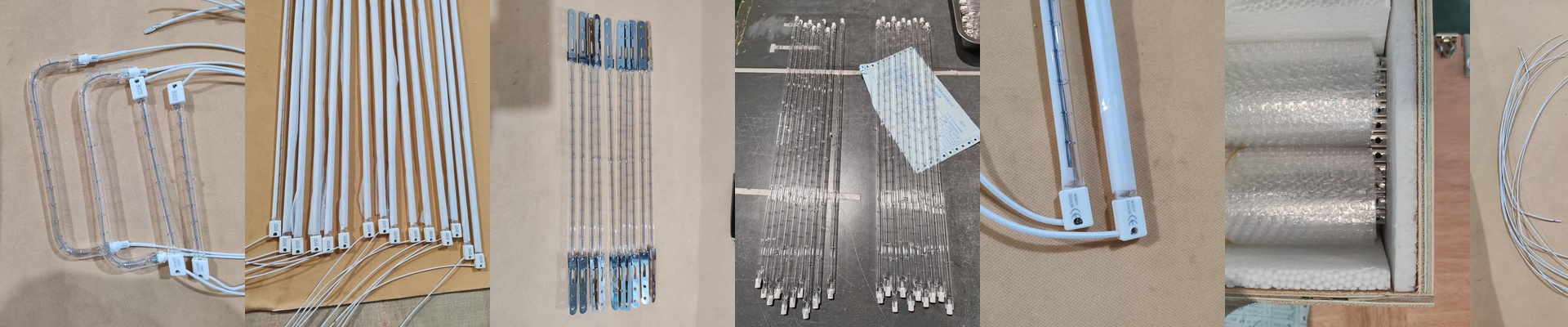
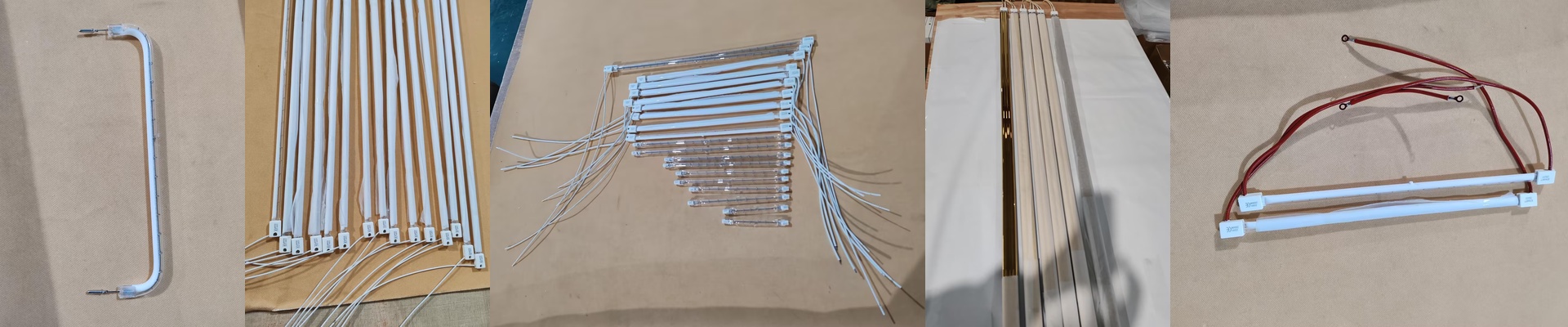
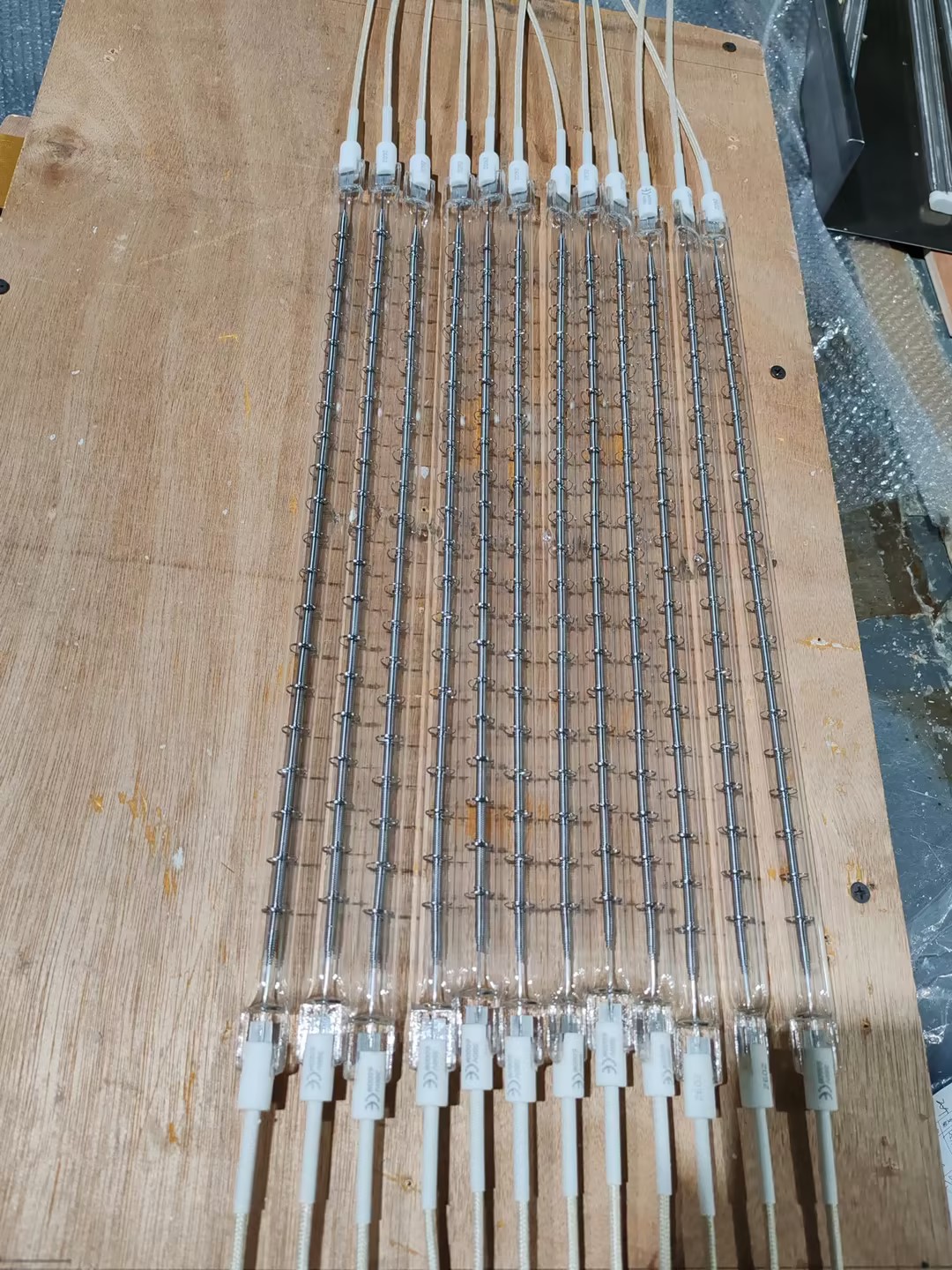
We use heavy-wall quartz because these things go through a lot of thermal shock. They heat up and cool down fast, and cheap glass just wouldn’t survive. You’ll also see some bulbs with a gold or reflective coating on the back. It’s a clever trick. It pushes all that IR energy forward, doubling the heat on your target and stopping energy from leaking out the back. As for the plugs, we usually stick with R7s or Sk15 connectors. They’re standard, so they usually slide right into most industrial heaters. More importantly, they create a tight fit. You really don’t want a loose connection here—at these current levels, a loose wire can arc and literally melt your housing.
The Trade-offs (The “Be Careful” Part)
Look, these bulbs are powerhouses, but they aren’t exactly “plug and play” for every single machine. Because the heat density is so high, that quartz envelope gets scary hot. It’ll burn you or ignite a stray piece of dust or debris in a heartbeat. Keep your reflectors spotless. If a layer of dust builds up on the mirror, it can create a “hot spot” that cracks the quartz. And don’t forget your cooling fans—make sure they’re beefy enough to handle the heat building up around the lamp housing, or things will get messy.