PEEK Part Annealing: Why Infrared Makes All the Difference
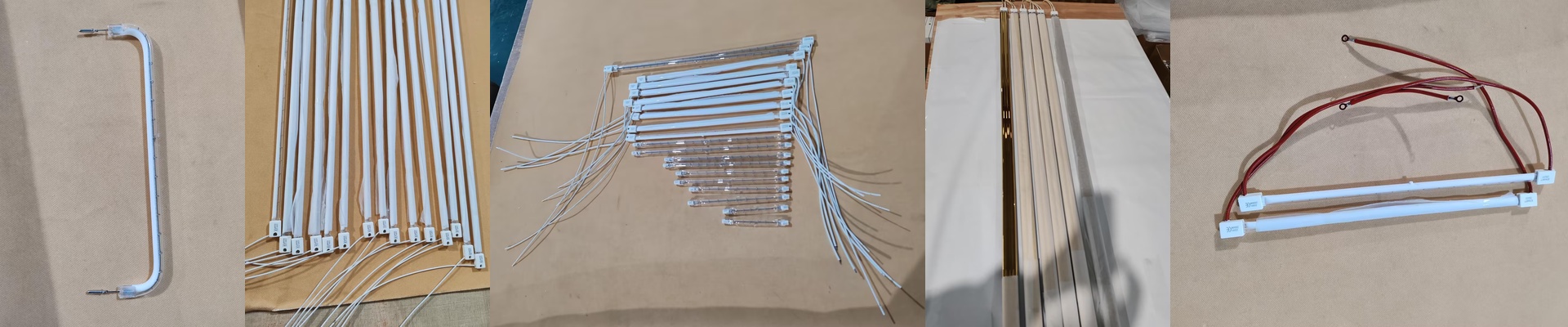
We built this PEEK annealing lamp to solve a headache we kept seeing on the shop floor: you either rush the cycle and risk quality, or you slow down to play it safe and kill your throughput. Traditional ovens are just… slow. They drag out the day and make it hard to keep crystallinity consistent. So we went a different route. The infrared halogen lamp puts the heat right where it needs to be—directly on the part. That means you can ramp up fast, shorten the cycle, and still get the internal stress relief you’re after.
Power, Voltage, and Geometry—Without the Fluff
Here’s the thing: this lamp runs at 400V, not standard mains. Why? Because we had to pack serious power density into a compact tube. At 2500W over a 300mm active length, the energy stays focused on the PEEK component instead of turning the whole chamber into a sauna. You get a quick temperature ramp, sure—but yes, your machine needs to be wired for 400V, and you’ll want to keep the thermal load in check. And that 300mm length? Not random. It lines up with the part carriers and tooling you already use in automated lines, so you can drop the lamp in without reworking the whole station.
What’s Inside: Halogen, Coating, and the R7s Details
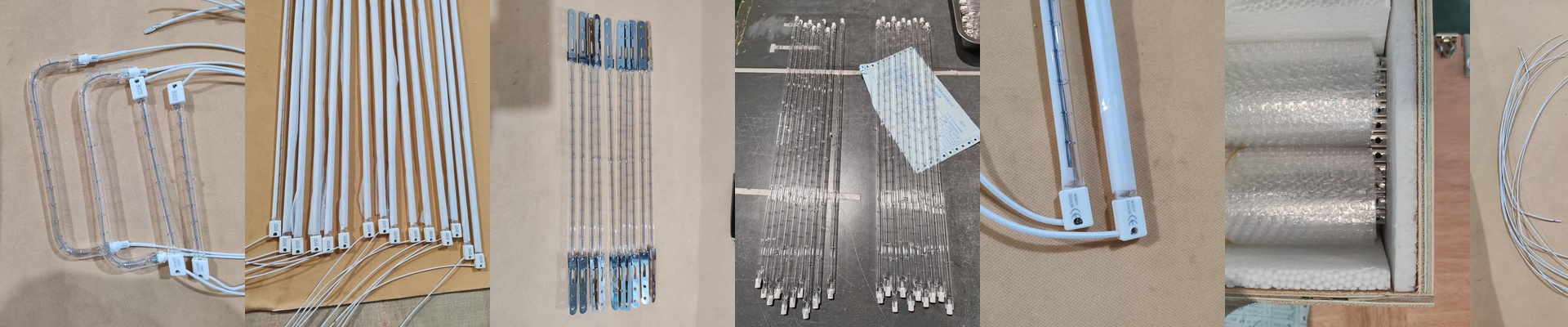
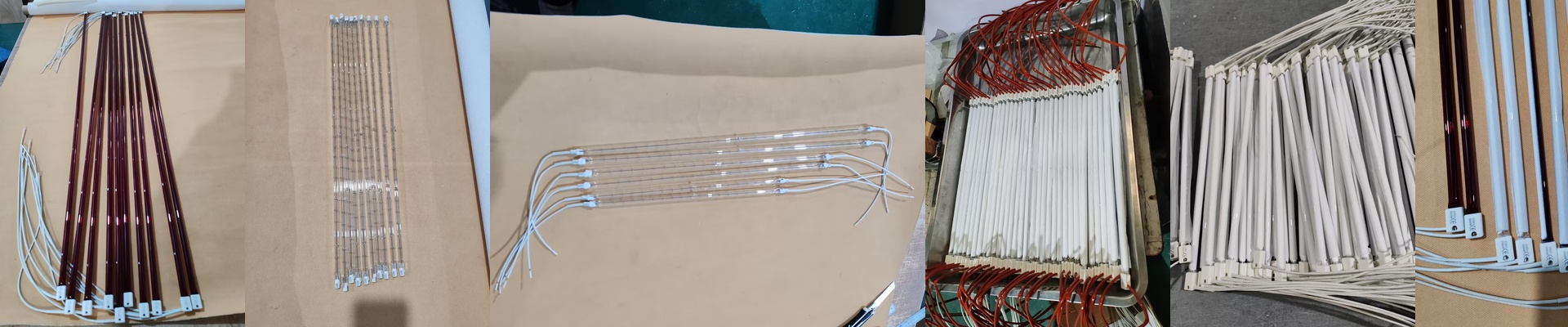
Inside, you’ve got a shortwave halogen element inside a quartz envelope. Quartz was chosen because it’s highly transmissive in the infrared band—so the heat goes straight into the polymer surface, with way less wasted convection. The lamp body has a reflective coating that pushes energy forward. That boosts yield per watt and keeps stray heat from bothering nearby sensors and fixtures. And the R7s connector? It’s not just a detail. It handles the current, makes swap-outs quick, and locks the axial alignment so the hot zone stays repeatable—shift after shift.
What It Feels Like on the Line
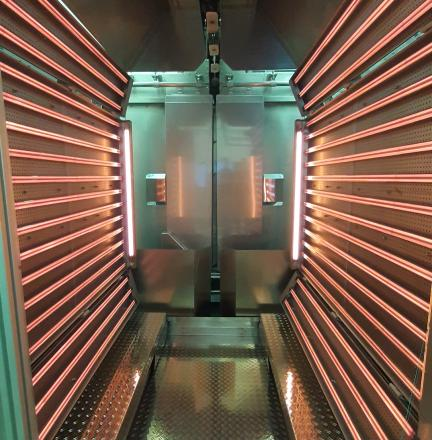
On the annealing line, this setup gives you faster heat-soak and shorter dwell. Cycle time drops, but you’re not crossing your fingers hoping the stress relief holds. The focused infrared profile helps even out thermal gradients across the part, which supports tighter dimensional control. In practice, that means simpler integration, fewer reworks, and a process you can trust—one that runs hotter per second, without making you pay for it in quality.