Introduction
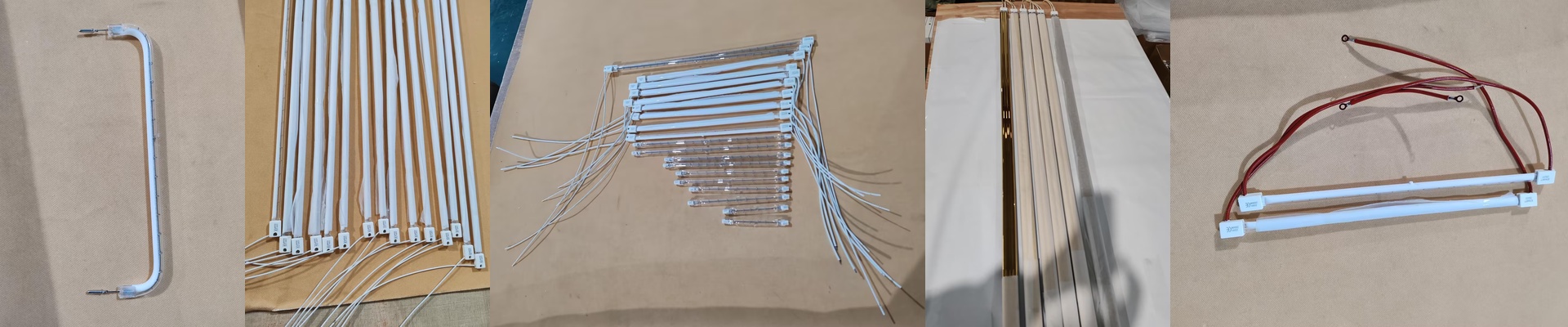
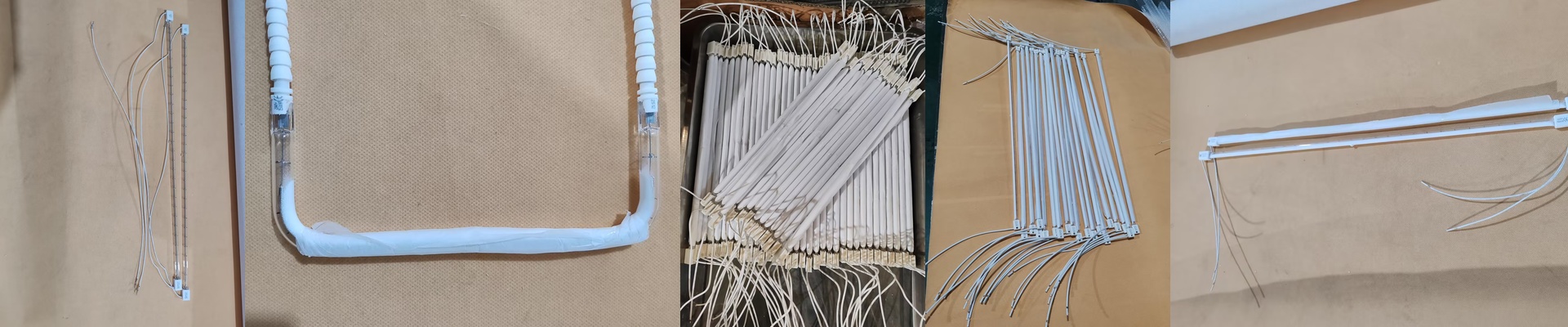
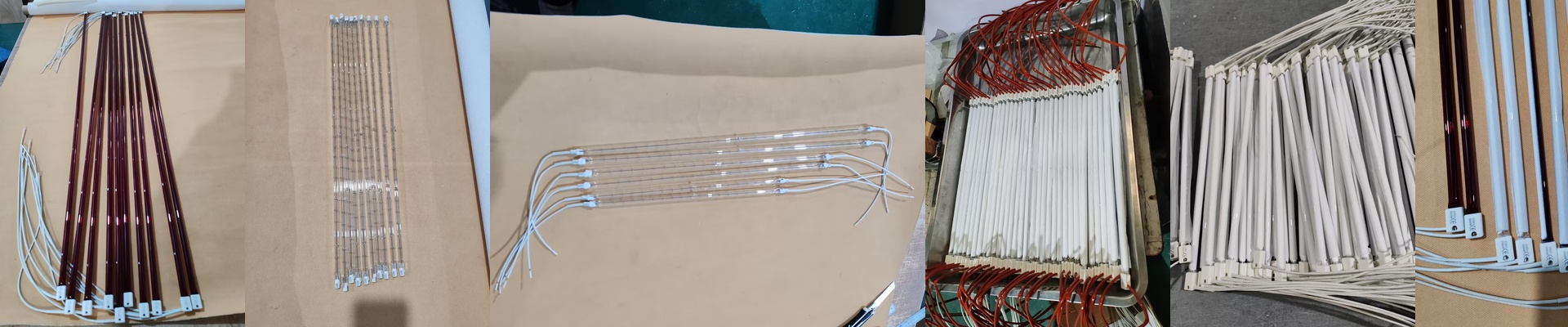
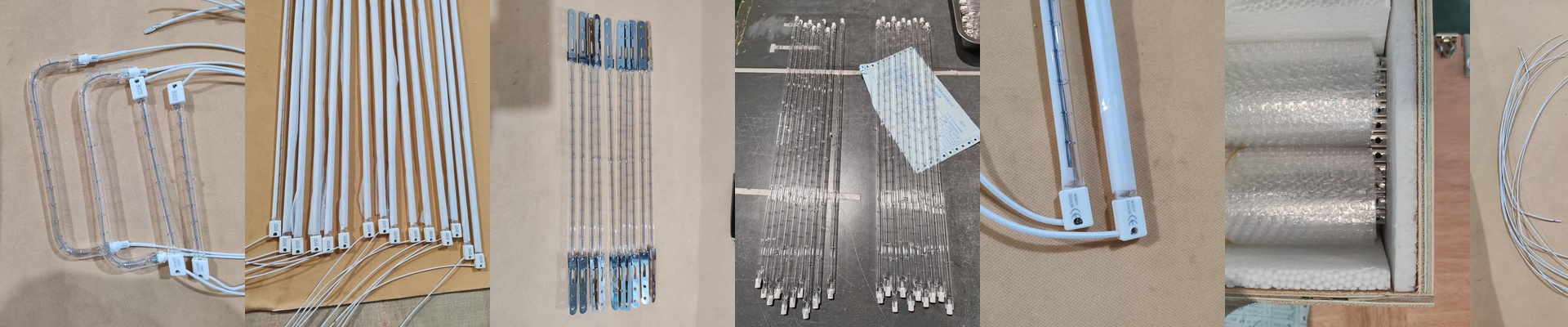
We make quartz halogen lamps with one thing in mind: the intense heat printers demand. These aren’t just bulbs you grab off the shelf. They’re precision heating tools, built to give you heat exactly where and when you need it—right where the ink has to set, dry, and fuse. When your printer is flying down the line at top speed, you need a heat source that wakes up instantly, holds its temperature steady, and fits the space like it was born there.
Power, Voltage, and Size: The Right Fit
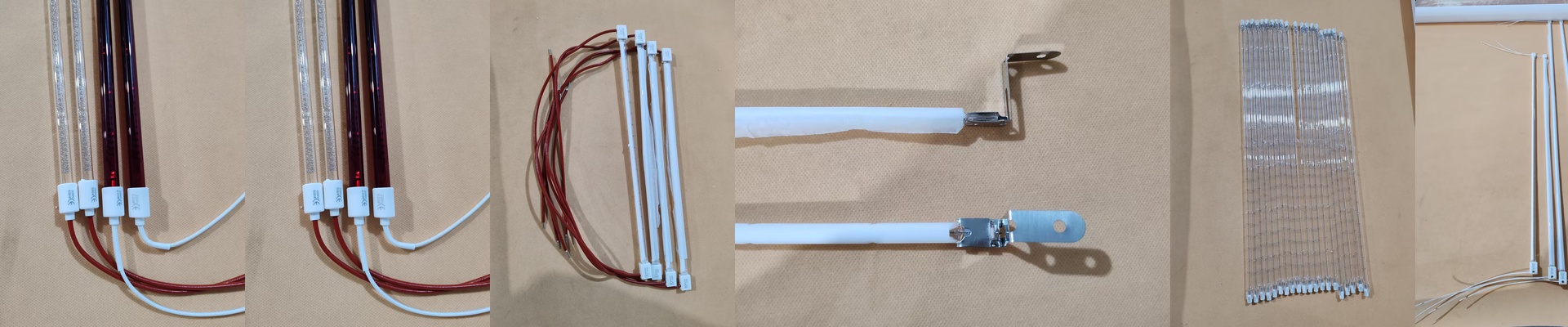
Printer heating zones are tricky—they need a lot of heat packed into a small spot. So we size these lamps to deliver serious power without taking up much room. We match the wattage and voltage to the printer’s needs, so you get the heat you need without straining the power supply. A 400V high-voltage setup is common when you’re pushing a lot of power through a tight space. It keeps the response time lightning-fast. And the length and diameter? They’re chosen to match the heated zone perfectly, so you get even heat across the whole area—no hot spots, no cold edges.
Built to Last: Quartz, Halogen, and the Right Connection
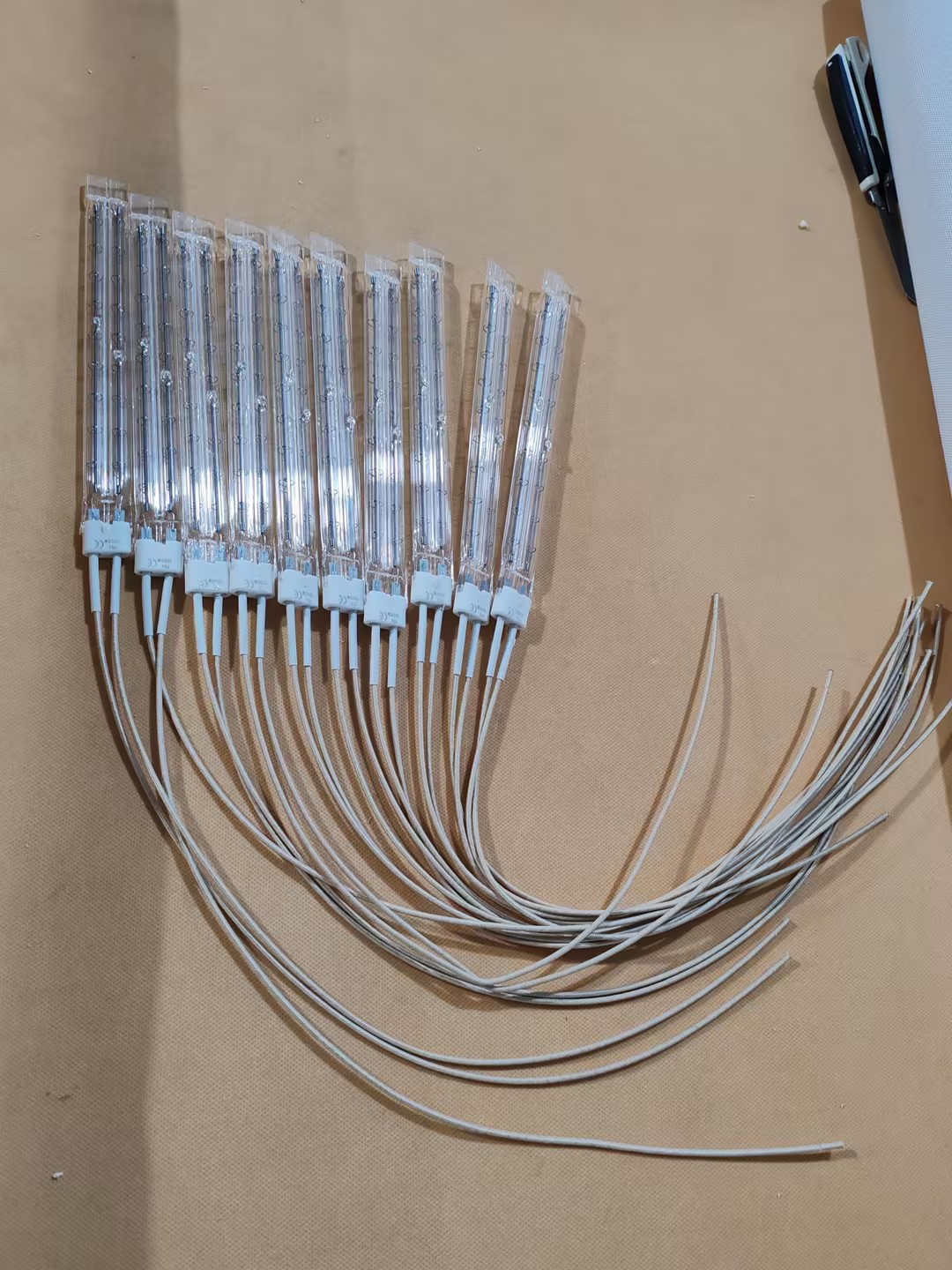
Quartz glass is the hero here. It handles the shock of turning on and off again and again, and it stays steady even when things get scorching hot. The halogen cycle keeps the filament clean, so the light output stays consistent over the lamp’s life—no dimming or blackening. Most of our printer lamps are shortwave infrared, which means they focus the energy where it counts: on the surface you’re heating, not the air around it. Efficient and effective. And the R7s connector? It’s just practical. It gives you a solid, two-ended electrical contact that’s easy to wire and stays aligned inside the reflector or housing. No fuss.
Why Printers Rely on This Setup
In a printer, heat can’t keep you waiting. It has to come on instantly and stay stable, even during long print runs. This lamp setup delivers that rapid ramp-up, so the machine never has to pause and wait for the heater to warm up. The compact design slips right into existing spots, making it a simple swap-in replacement. Now, the trade-off is real: that high heat density means the surrounding components—sensors, wiring, and cooling—need to be designed with that heat in mind. But when you match the lamp to the printer, the heat profile stays consistent, run after run.