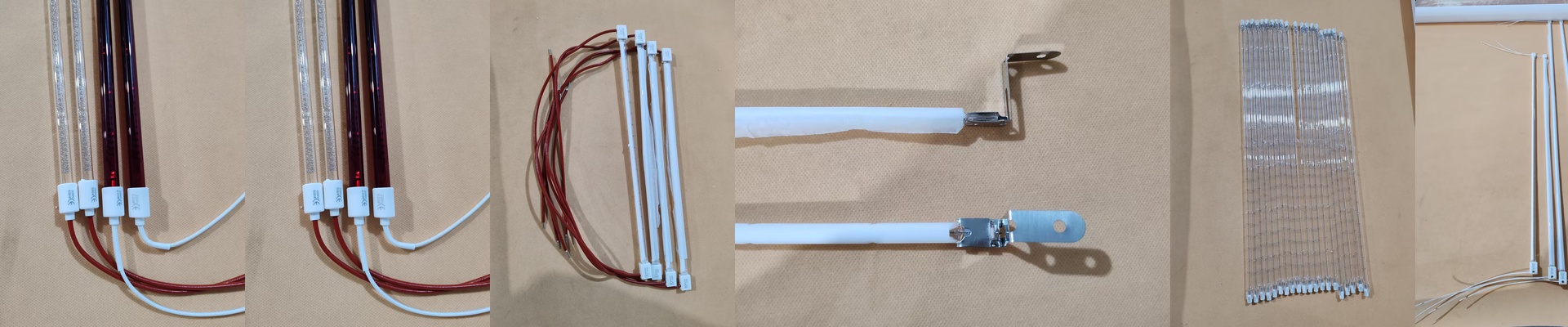
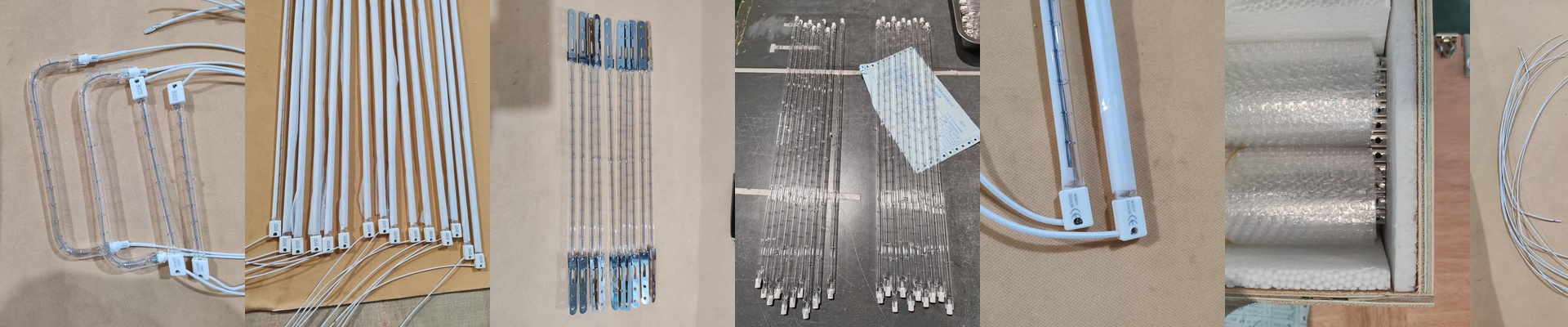
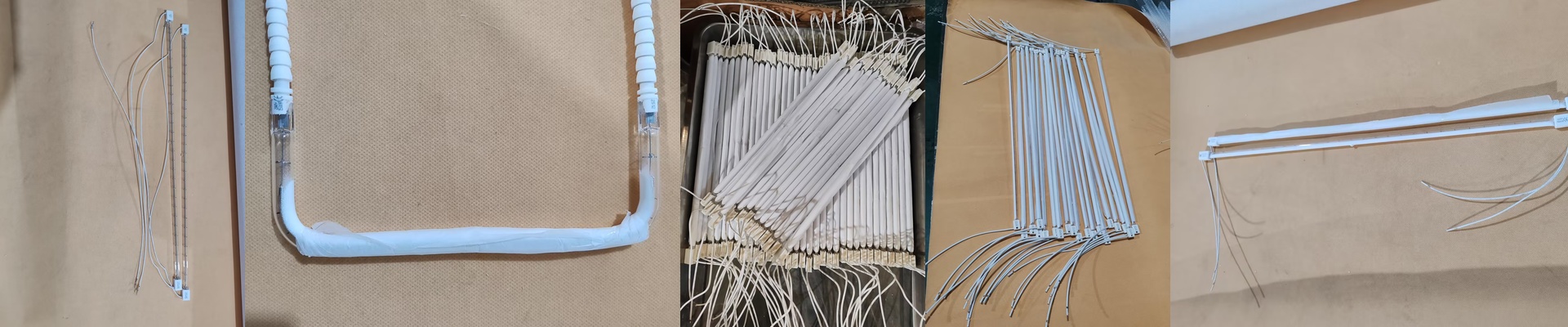
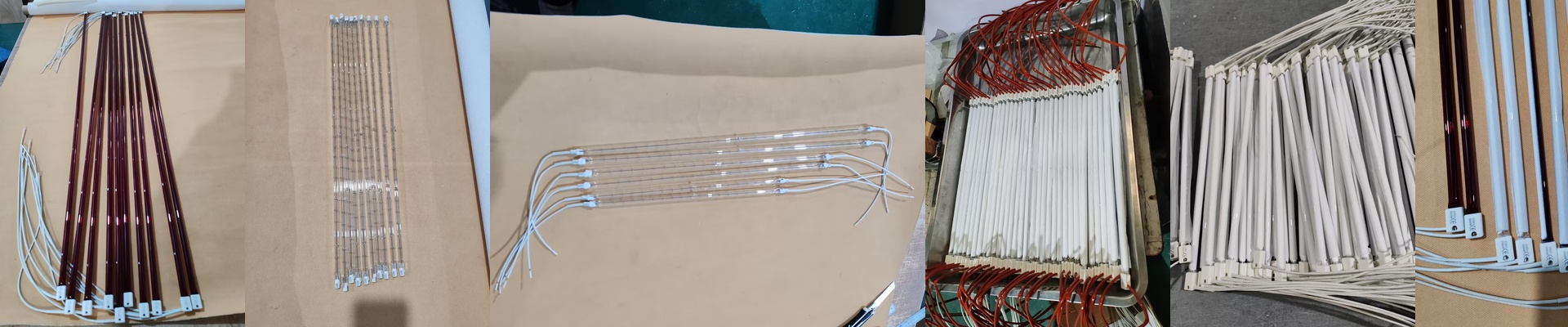
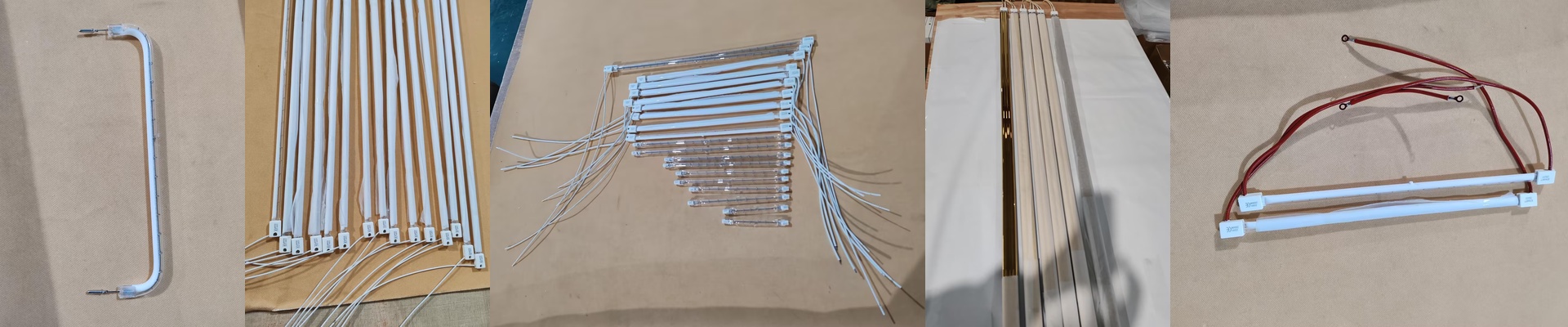
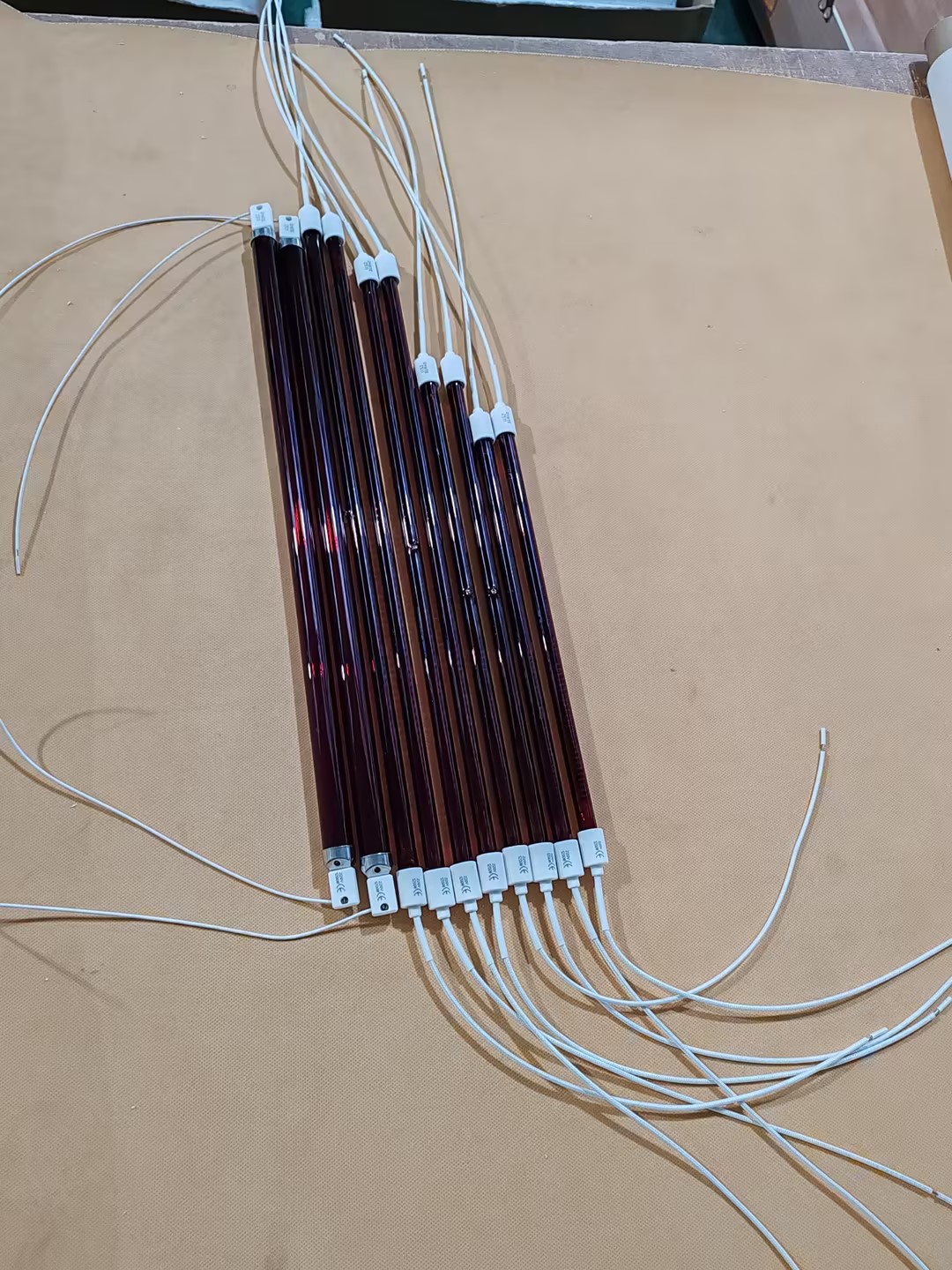
Let’s talk about what makes these heat tubes actually work.
We’re talking about short-wave halogen infrared heating elements, specifically the kind you’d spec out for serious industrial work. They’re built to pack a serious punch—high heat density, and they wake up fast. Most of the time, you’re looking at a 400V, 2500W unit that’s about 300mm long. That’s not just random numbers. It means the heat is focused right where you need it, whether you’re curing coatings or pre-heating plastic parts. And that 400V rating? It helps keep the current draw down on the line. But it also means your control circuit needs to be rated for that voltage, plain and simple.
The guts of the design.
Inside, you’ve got a quartz envelope filled with halogen gas. That’s what lets the filament run at crazy-high temperatures and churn out intense short-wave infrared radiation. The coating on the tube isn’t just there for looks. It filters specific wavelengths to match what your material actually absorbs, so you’re not wasting energy. Then there’s the R7s connector—double-ended, linear, and built to handle the heat. It locks in securely and is rated for high temperatures, so you can wire it up quickly. It’s a straight swap for standard halogen lamp fixtures.
What it’s like in the real world.
These tubes are made for the rough and tumble of industrial life. Their compact size means they slip into tight spots on a production line without a fight. And that fast heat-up? It shaves time off your cycle. Seriously. But here’s the catch. All that power comes with a trade-off. The intense heat means you’ve got to plan for solid cooling around the surrounding components. Do that, and you’ll keep everything from overheating and extend the life of the tube. The payoff is worth it. You get simpler machine design and heating performance you can count on, day after day.